

You’ve probably stood in front of a jammed scrub closet at 3 a.m., scanning name tags and hoping the right size appears. That moment—equal parts frustration and low-stakes detective work—is where many hospitals live today. This post walks you through moving from that chaotic ritual to a predictable, auditable system using RFID, cloud-based access, smart dispensing and people-focused change management.
1. Closet Culture: The Problem You Know Too Well
In hospital inventory management, you still track scrub checkouts with sticky notes or a spreadsheet—if you’re lucky. Day shift and night shift pull different amounts, so counts never match. Returns are uneven, accountability gets blurry, and units pass blame. Manual counts steal hours from patient care, creating visibility gaps that drive waste and extra labor.
Costs rise through lost linens, over-ordering, and emergency requisitions. Weak access control means “anyone” can open the closet. You’ve even found a cart of mystery scrubs—no owner, just cost.
2. Why This Matters: Patient Care, Waste and Supply Chain Risks
You’re not just managing scrubs—you’re protecting patient care, safety, and infection control. When closets run empty, point-of-care stockouts force substitutions or delays that can affect outcomes. Lost or unreturned linens drive budget creep, making reducing waste harder and forecasting unreliable.
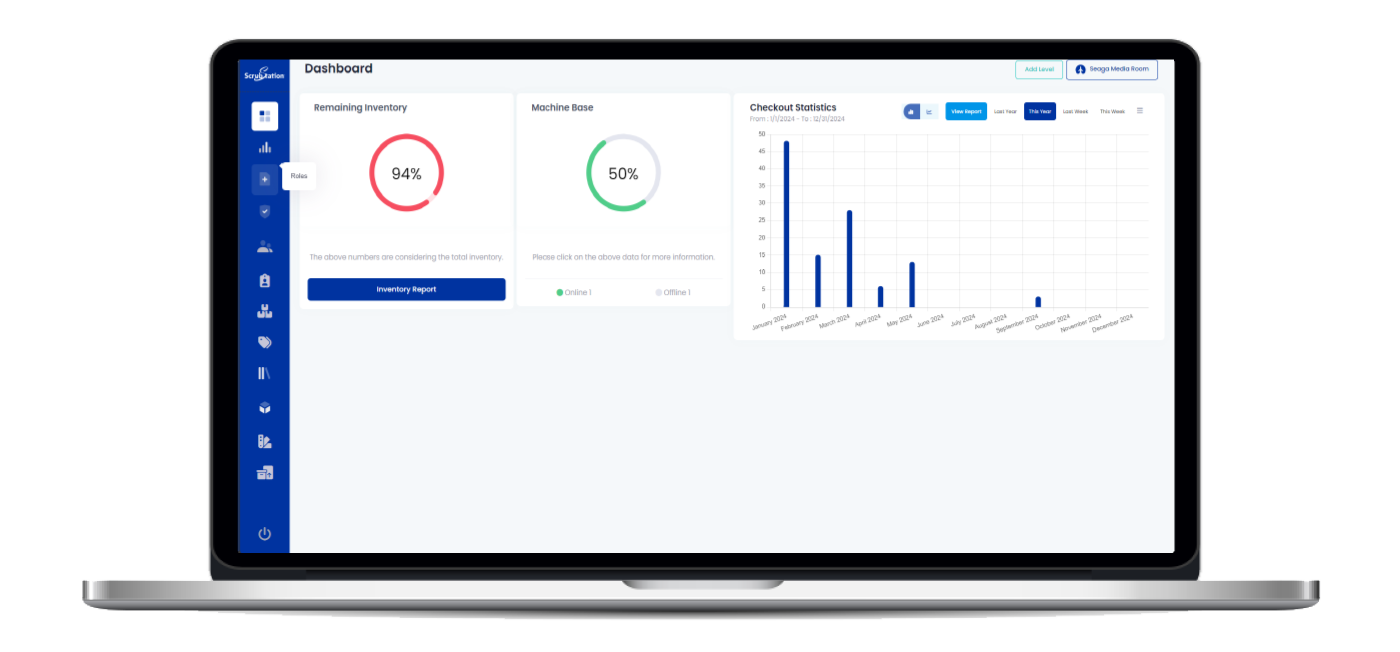
With cloud-based RFID access control, you can track who took what, when, and why, plus instant detection of returns. That real-time visibility supports just-in-time supply chain management, improves audit readiness, and helps ERP/EHR data integration for better financial predictability.
3. Tech You Can Trust: RFID and Automated Inventory Control
With RFID tracking hospital systems, you see who checked out scrubs, when, and from which unit—no manual scans, since readers capture many tags at once. A cloud-based inventory dashboard gives real-time tracking across closets and dispensers, while RFID access control ensures only trained, authorized staff can take items. Automated inventory control can sync to your ERP to cut entry errors and improve ordering accuracy. You also get instant detection of returned linens, plus rotation alerts to reduce waste and loss.
4. Placement & Point-of-Use Systems: Put Things Where They’re Needed
Choose point-of-use systems locations that match how you work: unit entrances, staff locker rooms, or central supply. When scrubs are close, you cut walking time, reduce errors, and keep demand aligned with supply—supporting continuous inventory visibility and real-time shelf awareness.
Map who checks out scrubs and when; mornings and shift changes are busiest, so place units there. Protect RFID reads by avoiding metal-heavy rooms. Test one-floor pilots to confirm read reliability and return flow, then scale or add mobile carts for surge times.
5. People First: Training, Accountability and Everyday Habits
In change management healthcare, you pair RFID and cloud access control with staff training programs that explain how checkout works and why returns protect patient care and sizing.
-
Simple SOPs: checkout, return, and exception reporting (lost/damaged).
-
Role-based access shows which job class took what, when, and at what times.
-
Place dispensers near locker rooms to reduce missed returns.
-
Recognize units with top return rates.
Track KPIs (return rate, exceptions logged, time-to-replace) to make data-driven decisions and cut cost savings vs profit loss.
6. A Practical Change Management Playbook You Can Use
Use this change management healthcare playbook to launch hospital inventory automation.
-
Pilot 4–8 weeks: one unit, one scrub/linen type; track who took what, when, and returns.
-
Align stakeholders: nursing, supply chain, IT, laundry, and finance.
-
Map workflows: current vs future; remove friction (placement, checkout times).
-
Train + measure: monthly reviews; KPIs: return rate, stockouts, manual-count hours saved.
-
Communicate: share wins, explain glitches, reward compliance.
7. Wrap-up: Next Steps You Can Take Tomorrow
Start with a 4–8 week pilot on one unit and one common scrub type to prove hospital inventory management ROI with clear KPIs. This week, bring nursing, EVS, supply chain, IT, and finance into a short discovery meeting to confirm placement, access rules, and return accountability.
Like it, Share it!